Phimosis and Paraphimosis
 |
Content Advisory: |
This page includes images of child and adult patients. |
Phimosis
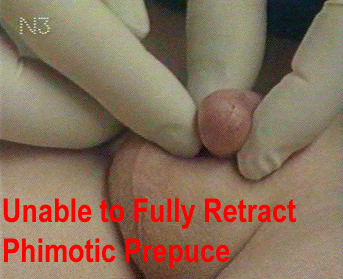
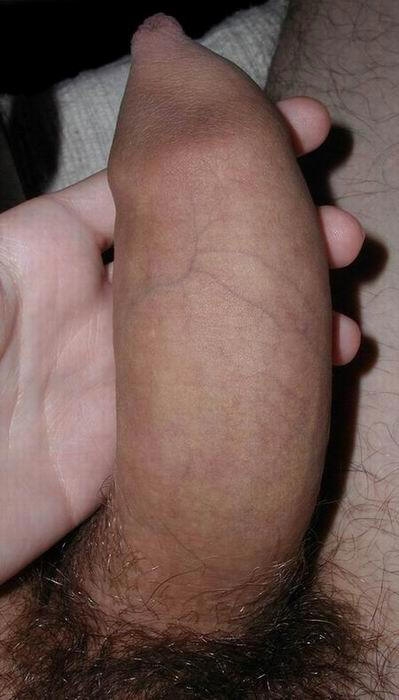
Phimosis is the condition where the foreskin cannot be retracted, or can only be retracted with difficulty. After infancy the foreskin of an uncircumcised male should be loose enough to be drawn back so as to completely expose not only the whole glans but also the groove of the sulcus behind it. It should also be possible to pull the foreskin forward again without pain or difficulty. In a mature youth this action should be possible with the penis erect. If the foreskin cannot be retracted, adequate washing is not possible and smegma accumulates.
Phimosis in adults makes sexual intercourse unsatisfactory or impossible. Intromission may be so painful that it cannot be accomplished. If it does take place without the foreskin retracted attaining orgasm will be difficult or impossible.
In severe cases of phimosis, the opening at the tip of the foreskin becomes so small ("pinhole prepuce") that even urinating becomes difficult.
[Photo submitted by a CIRCLIST member, who was subsequently circumcised] |
|
|
|
Paraphimosis
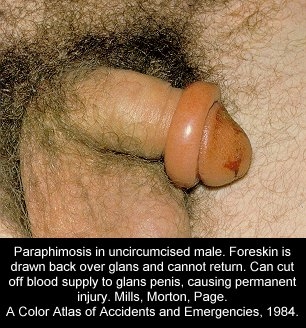
Paraphimosis is the condition where a retracted foreskin cannot readily be repositioned to cover the glans, instead remaining stuck in the retracted position. In this painful condition, the foreskin strangulates the glans and emergency treatment is necessary.
[Image © 1984, A Color Atlas of Accidents and Emergencies.] |
 |
Comments applicable to both conditions...
Phimosis and/or Paraphimosis may follow injury or inflammation, or it may be a developmental abnormality. Sometimes parents are surprised to learn that their teenager needs a circumcision, having been assured earlier in life that he was perfectly normal. The most likely cause is that the boy has not continued to retract his foreskin on a regular basis. The growth of the penis at puberty has then left him with an adult size penis and a juvenile preputial orifice. The editor had a school friend with exactly that problem. Before puberty he could retract his foreskin but only with some discomfort, so he didn't persevere with it. After puberty things became much more difficult. Parents should ensure that their sons always retract their foreskin in the bath or shower.
A tight foreskin can be cured by gentle stretching but this will generally only work in a young boy, and will require a lot of persistence. Force can cause splits or tears which will make the phimosis worse when they heal as scar tissue.
Steroid creams be used to help cure phimosis. However, the side effects of these are potantially problematic, and they are not very effective. Some steroids are carcinogenic and many are estrogen mimics; this has been known for years (Metzler, 1984). Neither of these characteristics appear desirable in a substance applied to male sexual anatomy!
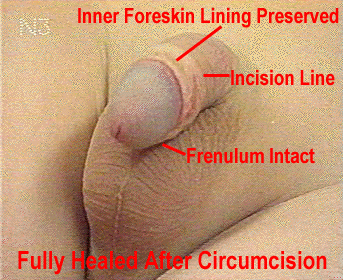
The simplest and most effective cure for a tight, phimotic foreskin is circumcision. The only cure for paraphimosis is circumcision.
Paediatric example
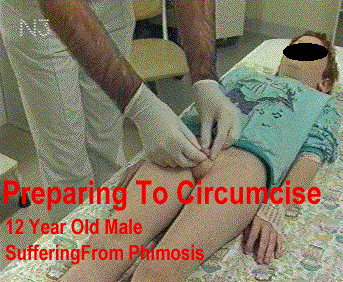
The following images, taken from a Public Broadcast TV programme in Germany (Norddeutsche Rundfunk Channel N3), show a boy of 12 undergoing circumcision for phimosis.
Copyright © 1992 - 2015, All Rights Reserved CIRCLIST.